


Table of Contents
Bus accidents on Long Island happen more often than most people realize. Whether it involves a county bus, a school bus, or a private charter, the consequences can be serious. Passengers, pedestrians, and cyclists who are struck by or involved in bus collisions often face significant injuries, medical expenses, and time away from work.
What makes these cases different from typical car accident claims is the layer of rules, deadlines, and parties involved. Government-operated buses, for example, require a specific legal filing before you can even pursue a lawsuit. Missing that deadline can end your case before it begins.
At Monarch Law Group, our bus accident lawyers handle bus accident cases across Long Island and understand what it takes to build a strong claim. This page explains the types of accidents we see, what causes them, what to do if you’ve been injured, and how liability gets sorted out when multiple parties may be responsible.
Types of Bus Accidents on Long Island
Long Island’s roads carry a wide mix of bus traffic every day. From commuters to students heading to school and tour groups on charter buses, the variety of vehicles and operators means no two accidents are exactly alike.
Public Transit Accidents
Buses on Long Island operate throughout both Nassau and Suffolk counties and are among the most common sources of bus-related injuries on Long Island. When a bus strikes a pedestrian, rear-ends a stopped car, or fails to yield at an intersection, the injured party must deal with the added layer of a government-operated entity.
Claims against the county or other public authorities require filing a notice of claim within 90 days of the incident, a strict deadline that applies before any lawsuit can be filed. Missing this window typically bars recovery entirely, regardless of how strong the underlying case might be.
School Bus Accidents
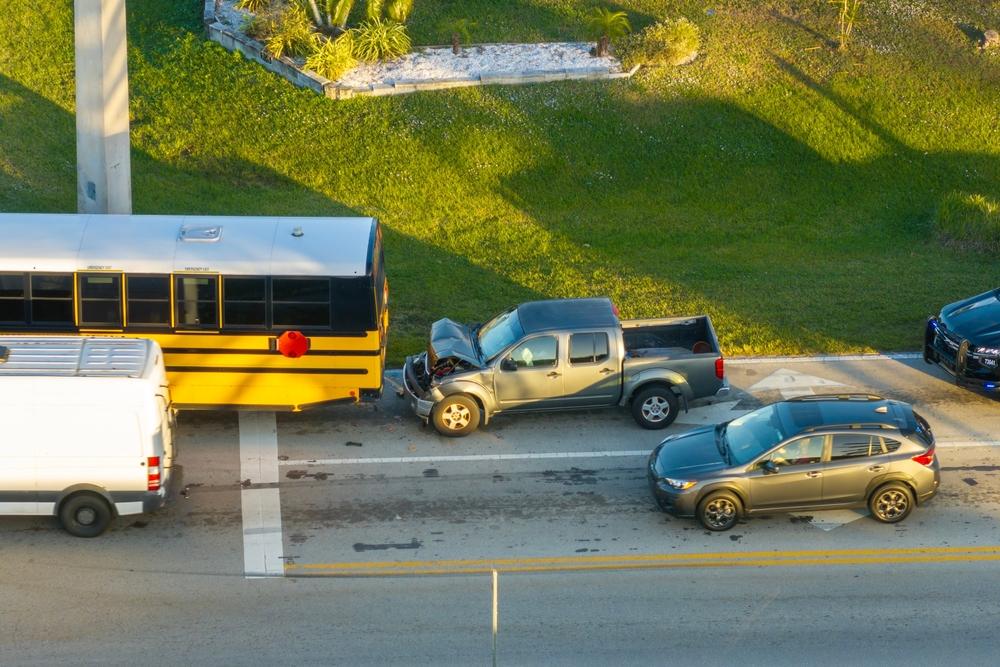
These types of bus accidents are particularly concerning because they often involve children as bus passengers. These incidents may involve driver error, mechanical failure, or unsafe drop-off conditions. Liability can fall on the school district, the bus company, or both, depending on whether the district contracts transportation out to a private operator.
New York personal injury law imposes specific duties on bus drivers, including requirements around stops, flashing lights, and student crossing procedures, making compliance records an important part of any investigation.
Private and Charter Bus Accidents
Charter buses, tour buses, and employer-provided shuttles operate under federal and state regulations overseen by the Federal Motor Carrier Safety Administration. These carriers are required to maintain logs, inspection records, and driver qualification files. When a charter bus is involved in an accident, those records often become central to determining whether the carrier met its safety obligations.
Private bus claims typically move through standard civil litigation rather than requiring a government notice of claim, but they still involve multiple layers of insurance and corporate liability.
Common Causes of Bus Accidents
Understanding what caused an accident is essential to determining who is responsible. Bus accidents on Long Island stem from a range of factors, and identifying the root cause often requires a detailed review of driver behavior, vehicle records, and road conditions.
Driver Negligence
Driver negligence is one of the most frequently cited factors in bus accidents. Distracted driving, speeding, failing to check mirrors before changing lanes, and impairment all contribute to preventable collisions. Bus drivers hold a commercial license and are subject to higher standards of care than ordinary drivers under New York law.
When a negligent driver deviates from those standards, and someone is injured as a result, both the driver and their employer may bear responsibility. Fatigue is also a recognized risk factor in commercial driving, and federal regulations place limits on how many consecutive hours a driver may operate a vehicle.
Vehicle Maintenance Failures
Buses are large, heavy vehicles that require consistent maintenance to operate safely. Brake failures, tire blowouts, steering defects, and malfunctioning doors have all contributed to bus accidents on Long Island and across New York.
When a maintenance failure causes a crash, liability may fall on the company responsible for servicing the vehicle, the bus owner, or the operator, depending on the specific failure and who was responsible for addressing it. Maintenance logs and inspection records are often key pieces of evidence in these cases.
Road and Weather Conditions
Slippery roads, poor signage, and inadequate infrastructure can contribute to bus accidents, particularly during the winter months on Long Island. In some situations, a government entity responsible for road maintenance may share liability for conditions that contributed to a crash. These claims involve a separate set of procedural requirements and can be more difficult to pursue, but they are worth investigating when road conditions played a clear role.
Documenting conditions at the scene promptly, including photographs and weather records, supports this type of claim.
Steps to Take After a Bus Accident
What you do in the hours and days after a bus accident can have a real effect on your claim. Taking the right steps early helps protect both your health and your legal options.
Immediate Safety Steps
Seek medical attention right away, even if your injuries seem minor at first. Some devastating injuries, including concussions and soft tissue damage, may not produce obvious symptoms immediately but can worsen over time.
Call 911 to report the accident and ensure that an official police report is created. Collect contact and insurance information from the bus driver and any witnesses present, and take photographs of the accident scene, your injuries, and any visible vehicle damage before leaving the area.
Preserving Evidence
Evidence in bus accidents can disappear quickly. Surveillance footage from cameras on buses or nearby businesses may be overwritten within days. Witness memories fade, and skid marks and debris are cleaned up.
Requesting that footage be preserved is something an attorney can do promptly through a formal legal hold notice. Keep all medical records, bills, and correspondence related to the accident in one place. If the accident involved a county or government bus, remember that the 90-day notice of claim deadline means there is very little time before action must be taken.
Contacting a New York Bus Accident Lawyer
Reaching out to an experienced bus accident lawyer early gives you the best opportunity to protect your claim. An attorney can handle contact with insurance companies on your behalf, ensure deadlines are met, and begin the process of gathering evidence before it is lost.
Bus accident cases often involve multiple defendants, which means the legal process can be more involved than a standard car accident claim. Having legal representation from the outset helps ensure nothing is overlooked.
How Liability Works in Bus Accident Cases
Liability in a bus accident is rarely straightforward. Depending on the type of bus and the circumstances of the crash, several parties may share responsibility.
Identifying Responsible Parties
The bus driver, the bus company or transit authority, a maintenance contractor, and even a government entity can all potentially be liable depending on what caused the accident. New York follows a comparative fault legal system, meaning that each party’s degree of responsibility is assessed individually.
If you were partially at fault, your recovery may be reduced by your percentage of fault, but you may still be entitled to compensation. Identifying every responsible party early in a case matters because it affects both strategy and the overall amount that may be recoverable.
Government Entity Claims
When a bus is operated by a government authority, a school district, or a municipal transit agency, special procedural rules apply. The notice of claim requirement under New York CPLR gives government entities a chance to investigate claims before formal litigation begins.
Failure to file this notice within 90 days is a significant procedural bar and cannot usually be excused after the fact. These claims also have shorter statutes of limitations than typical personal injury cases, making early legal consultation important.
Insurance Considerations
Bus companies and transit authorities carry substantial insurance policies, but that does not mean claims are resolved quickly or fairly without representation. Insurers will investigate the accident from their own perspective, and early statements made by injured parties can be used to minimize their payout. Understanding the insurance structure involved, including whether multiple policies may apply, is part of building a well-supported claim.
A pedestrian struck by a bus, for example, may also have claims available under their own uninsured motorist coverage or other policies, similar to what applies in a pedestrian accident claim generally.
How the Law Firm of Monarch Law Group Approaches These Cases
Every bus accident case involves its own set of facts, parties, and legal considerations. Monarch Law Group works methodically through each stage to build claims that are grounded in evidence and supported by a clear legal theory.
Case Evaluation
The first step is a thorough review of what happened, who was involved, and what evidence exists. During an initial consultation, our attorneys listen to what you experienced, explain the legal framework that applies to your situation, and identify any immediate deadlines. No two bus accident cases are identical, so this evaluation is specific to your circumstances rather than a general overview.
Investigation Process
Our team works to gather and preserve evidence as early as possible. This includes requesting bus maintenance records, driver qualification files, accident reports, and available surveillance footage.
When technical questions arise, such as those involving vehicle mechanics or accident reconstruction, we identify appropriate resources to support the analysis. Thorough investigation before litigation begins often determines how effectively a case can be presented.
Client Communication
Our attorneys keep clients informed at each stage of the process. You should always know where your case stands, what to expect next, and who to contact with questions.
Bus accident claims can take time to resolve, especially when government entities are involved, and clear communication throughout that process matters. We are available to answer questions and explain developments as they occur.

New York Bus Accident Claim FAQ
Bus accident cases raise a lot of questions, particularly around deadlines, liability, and what to expect from the legal process. The answers below address some of the most common concerns we hear from clients.
What Is the 90-Day Notice of Claim Requirement?
If your bus accident involved a government-operated vehicle, such as a city bus or school district bus, you must file a notice of claim within 90 days of the incident. This is a formal document that notifies the government entity of your intention to seek compensation. Failing to file within this window generally bars you from pursuing a lawsuit against that entity.
How Long Do I Have to File a Bus Accident Lawsuit in New York?
For private bus companies, the standard personal injury statute of limitations in New York is three years from the date of the accident.
For claims against government entities, the timeline is shorter, often one year and 90 days from the date of the incident. These deadlines vary based on the parties involved, so consulting an attorney as soon as possible is important.
Can a Pedestrian Sue After Being Struck by a Bus?
Yes. Pedestrians struck by buses have the same right to pursue compensation as passengers or other injured parties. The specific process depends on whether the bus was government-operated or privately owned.
A pedestrian injured in this type of collision may have overlapping claims, similar to those handled by a pedestrian accident lawyer, and the circumstances of each case determine which parties can be held liable.
What Damages Can I Recover After a Bus Accident?
Injured parties may be entitled to compensation for medical expenses, lost wages, pain and suffering, and other losses related to the accident. The specific damages available depend on the nature and extent of your potentially serious injuries, your ability to document losses, and the applicable liability rules. New York’s catastrophic injury threshold applies to no-fault cases, which can affect which damages are recoverable.
What if I Was Partially at Fault in My New York Bus Accident Case?
New York follows a pure comparative fault rule, meaning you can still recover compensation even if you were partially responsible for the accident. Your total recovery is reduced by your percentage of fault.
For example, if you are found 20 percent at fault, your recoverable damages are reduced by 20 percent. This rule applies even in cases involving government entities.
Do I Need a New York Bus Accident Lawyer if the Insurance Company Contacts Me?
You are not required to speak with an insurance adjuster, and doing so without legal guidance carries risk. Adjusters work on behalf of the insurer, not on your behalf, and early recorded statements can be used to limit your recovery. Having a personal injury attorney handle communication with insurers from the outset helps protect your interests throughout the process.
How Are New York Bus Accident Cases Different from Car Accident Cases?
Bus accidents often involve multiple liable parties, government-specific procedural rules, and larger insurance policies than standard motor vehicle accident claims. The presence of a commercial carrier, a transit authority, or a school district introduces distinct legal considerations. These factors generally make bus accident cases more procedurally involved than two-car collision claims, which is why early legal involvement tends to make a meaningful difference.
Contact Monarch Law Group for a Free Consultation About Your New York Bus Accident Claim
If you or someone close to you was injured in a bus accident on Long Island, the time to act is now. Deadlines in these cases, particularly those involving government buses, are strict and unforgiving. The law office of Monarch Law Group represents injured individuals across Long Island and takes the time to understand the full picture of what happened and what you may be owed.
Call our office or fill out our contact form to schedule a free legal consultation with one of the trial lawyers on our legal team.


